
TL; DR
- The myths are costing you time, not just confidence. SMBs delaying AI adoption because of misconceptions are paying an invisible opportunity cost — competitors automating routine tasks are compounding a lead that gets harder to close.
- AI has moved from enterprise-only to SMB-standard. Most relevant tools now run $20–$200/month with no data science team required — the barrier was cost and complexity, and both have largely disappeared.
- AI replaces tasks, not judgment. The data shows AI overwhelmingly augments existing teams rather than eliminating roles — it drafts and analyzes; humans still decide, refine, and approve.
- Results compound over months, not days. Realistic timelines run 4–12 weeks for initial signal and 2–3 months before compounding gains show up — treating it as a quick fix (or giving up early) is why many SMBs conclude "AI doesn't work for us."
- Generic inputs produce generic — not bad — output. The real risk with AI content isn't low quality, it's sounding like everyone else's prompt; specificity (brand voice, real examples, clear constraints) is what differentiates it.
Imagine a founder reads a headline about AI replacing marketers, gets spooked, and spends another year doing everything manually. Meanwhile, a competitor automates their email segmentation, saves twelve hours a week, and reinvests that time into customer relationships.
Nobody invoices you for the myth. But you pay anyway.
The problem with AI marketing misinformation isn't that it makes business owners feel confused. It's that it creates inaction at exactly the wrong moment. Research found that 39% of small businesses currently use AI, up from just 14% in 2023. That gap represents thousands of businesses that started moving while others were still debating whether AI was "really for them."
The myths circulating about AI marketing are not harmless skepticism. They're a slow, invisible drag on your growth. And most of them, when you examine them closely, collapse under the weight of actual evidence.
This article takes eight of the most persistent AI marketing myths and examines each one honestly, with real numbers, real examples, and practical guidance on what to do instead.
Myth #1: AI marketing is only for large enterprises with big budgets
Where this myth comes from
The enterprise origin story is understandable. Early AI tools were genuinely expensive. The first wave of marketing AI required data scientists, custom integrations, and six-figure contracts. When you read about Amazon's recommendation engine or Netflix's personalization algorithm, it's easy to assume the technology belongs to companies with thousand-person engineering teams.
But that was a different era.
The reality today
Forbes research on SMBs reports that 77% of small businesses now use AI in some capacity. That's not a rounding error or a loose definition. It represents the fundamental shift that happened when AI moved from proprietary infrastructure to SaaS tools priced at $20 to $100 per month.
Millions of SMBs platforms already use, now include AI-powered audience segmentation, subject line optimization, and campaign analytics as standard features. You're not buying "AI." You're just using the email tool you already have, and it happens to get smarter.
AI consultant Shane Gossert puts it directly:
"AI is now accessible to SMBs through tools, APIs, and MSPs that can deploy and manage it affordably." The managed service model especially matters here. You don't need an in-house team. You need a clear use case and a platform that solves it.
Myth #2: AI will completely replace your marketing team or staff
The fear and why it persists
Job displacement anxiety is one of the most human responses to new technology, and it's not irrational. Automation has reshaped industries before. So, when someone hears "AI can write emails, generate ad copy, and segment your audience," the mental leap to "so we don't need a marketer anymore" seems logical.
It's also wrong in a very specific, important way.
What AI actually does vs. what humans do
Harvard’s research found that 89% of small business respondents said AI did not decrease their need for workers. That figure is striking. Not because AI can't handle tasks, but because the tasks it handles free humans to do higher-value work.
As one AI marketing platform, frames it precisely: "AI replaces tasks, not thinking. The shift is leverage. The best marketers will look more like orchestrators than executors."
Think about what that means practically. An AI tool can draft ten email subject line variations in thirty seconds. A human marketer still decides which one fits the brand, approves the message, and interprets why one outperformed the others. The drafting gets automated; the judgment stays human.
The mistake is treating AI as a replacement system rather than an amplification tool. A solo marketer using AI well can produce output that previously required a team of three. That's a competitive advantage, not a headcount reduction.
The augmentation model in practice
The most effective SMB approach treats AI as a capable assistant with no ego, no sick days, and no preference for how things have always been done. It drafts. It analyzes. It suggests. You decide, refine, and direct.
Skills worth developing alongside AI: prompt clarity (knowing how to ask for what you actually want), output evaluation (recognizing when AI content is generic and needs reworking), and strategic framing (giving AI enough context that its output is actually useful).
Myth #3: AI marketing tools are too complicated for non-technical smb owners
The perception that AI requires coding knowledge or a background in data science made sense five years ago. It doesn't anymore.
Modern AI marketing platforms are built for people who know their customers, not people who know Python. AI platform features are configured through checkboxes and dropdowns. Some AI image generation works by typing a description. While some respond to plain English.
The real skill gap isn't technical. It's knowing what you want. An SMB owner who can describe their ideal customer, articulate what makes their product different, and explain what they want a piece of content to accomplish can use AI tools effectively from day one.
What actually helps adoption:
- Start with familiar tools. If you already use an email platform or social scheduler, check what AI features it already has before adding anything new.
- Use AI for tasks with clear, measurable output. Writing a product description, generating five Instagram caption options, summarizing a customer feedback survey. These are low-risk, easy-to-evaluate use cases.
- Expect iteration. The first draft from an AI tool is often 70% of the way there. Your job is the last 30%, which is usually the most important part anyway.
Myth #4: AI-generated content is low quality and will hurt your brand
Historical basis, current reality
This myth has roots in something real. Early AI-generated content was noticeably bad: stilted phrasing, generic structures, no sense of audience. If you tried these tools in 2019, the skepticism was earned.
The current generation of tools is genuinely different. The content they produce is no longer obviously robotic. The problem has shifted from "quality too low to use" to "quality good enough to publish without thinking about it," which creates a different risk.
The actual threat: generic, not terrible
The danger of modern AI content isn't that it's bad. It's that it sounds like everyone else using the same prompt. If you ask an AI to "write a LinkedIn post about our new product," you'll get something functional and forgettable, because every other business is asking the same question.
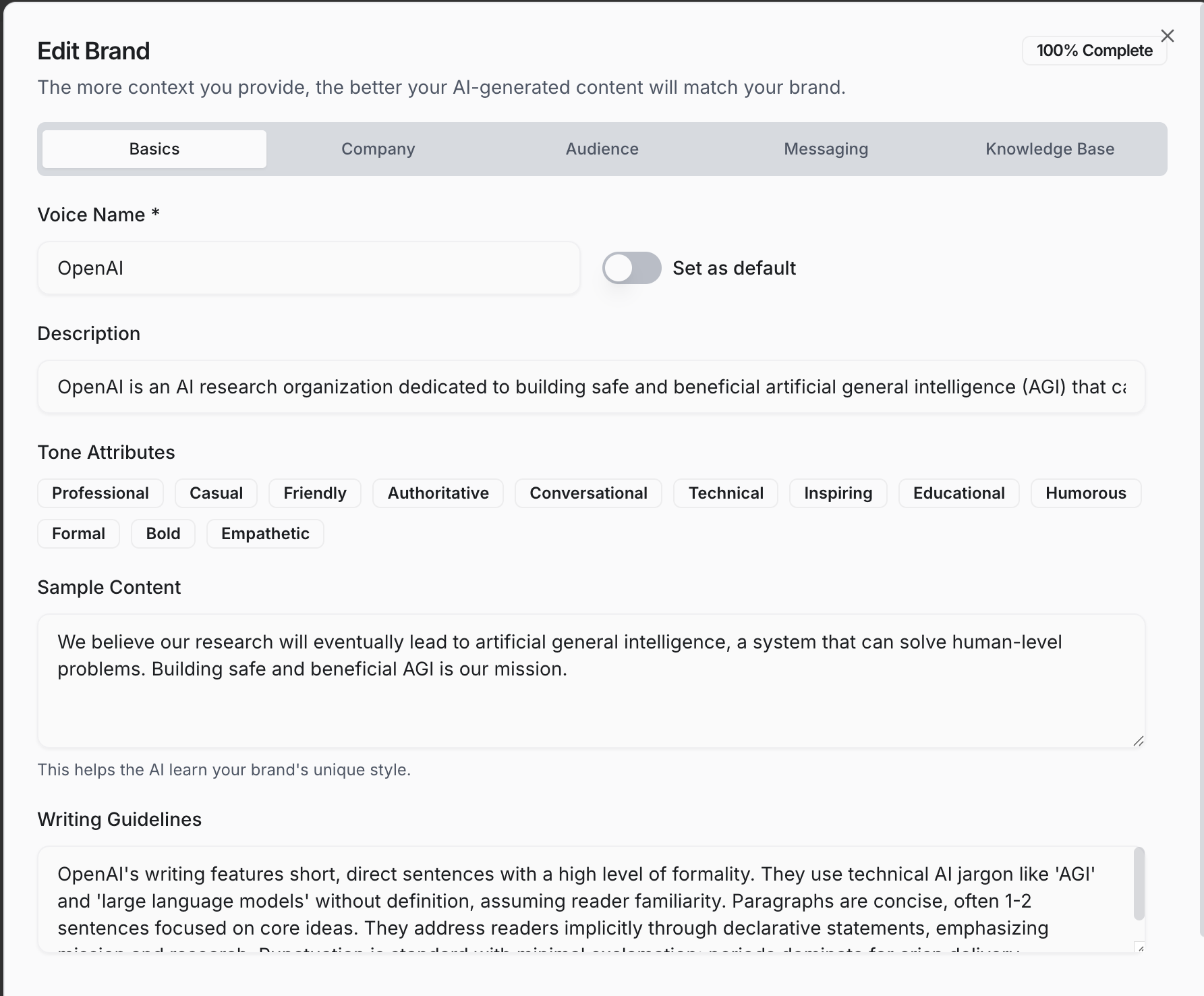
The solution is specificity. Give AI your brand voice guidelines. Share customer quotes you want to echo. Describe the emotion you want the reader to feel. Tell it what you don't want it to say. The more context you provide, the more differentiated the output becomes.
Maintaining brand voice
A practical approach:
- Create a one-paragraph brand voice description (tone, personality, language to use, language to avoid).
- Paste it into every AI content request as context.
- Review every AI draft against a simple question: "Does this sound like us?"
- Edit to add specific details, examples, or phrases that only your company would use.
- On the SEO question: Google's guidance focuses on whether content is genuinely helpful and written for people, not on whether AI was involved in creating it. Quality, relevance, and depth matter. Origin doesn't.
Myth #5: AI marketing requires massive customer data to be useful
Where the 'big data' assumption comes from
When people hear about Amazon's recommendation engine or Spotify's personalization algorithm, they imagine warehouses of data making the magic happen. That scale is real for those companies, but it's not a prerequisite for getting value from AI marketing tools.
What you actually need
Most SMB-facing AI marketing tools don't require you to feed them terabytes of custom data. They come pre-trained on enormous general datasets and then refine outputs based on your specific inputs.
Your existing data, which likely includes email open and click rates, website analytics, basic CRM records, and purchase history, is enough to start getting personalized, useful output from most platforms. It makes this point clearly: AI can even improve your data by surfacing gaps and inconsistencies you didn't know were there.
Starting with what you have
A practical inventory: What are your top five customer segments? What do your best customers have in common? Which products or services drive the most repeat business? What time of day do your emails get opened?
If you can answer those questions from memory or with a quick look at your existing tools, you have enough to start. The AI doesn't need perfection. It needs signal, and the signal you already have is real.
Myth #6: AI marketing produces instant results with no ongoing effort
The 'set it and forget it' problem
This might be the most damaging myth of all, because it creates predictable failure. An SMB owner reads about AI's potential, buys a tool, sets it up over a weekend, checks results after two weeks, sees nothing dramatic, and concludes "AI doesn't work for businesses like mine."
What actually happened: they treated a compound-interest investment like a lottery ticket.
What a realistic timeline looks like
According to McKinsey, AI adoption "takes time, and results often improve as tools learn from data and adapt to the needs of the business." That's not a warning. It's a description of how compounding works.
Week one to two: setup, integration, first outputs. Mostly about learning the tool.
Month one: you have baseline data. You understand what the tool does well and where it needs direction.
Month two to three: you're refining prompts, testing variations, and starting to see measurable improvement in specific metrics.
Month three and beyond: the compound effect kicks in. Better data informs better decisions, which generate better data.
Deloitte’s guidance frames it as "an investment, not an expenditure," which means measuring it over quarters, not days.
Myth #7: AI marketing is impersonal and turns off customers
The intuition here is that automation equals mass messaging, and mass messaging feels cold. That was true when "automation" meant blast emails with no segmentation and zero personalization.
Modern AI does the opposite. It makes personalization economically feasible at a scale that was previously impossible for small businesses.
AI-powered chatbot gives personalized beauty recommendations at scale. Amazon's recommendation engine (built on purchase history, browsing behavior, and demographic data) accounts for an estimated 35% of total revenue. It doesn't feel impersonal to customers because the personalization is meaningful and contextual.
For SMBs, the same principle applies at a smaller scale. An email platform that sends different content based on whether someone bought last week or last year isn't impersonal; it's attentive. An ad that adapts copy based on which page someone visited on your site isn't manipulative; it's relevant.
The line between personalization and surveillance is real and worth respecting. Customers appreciate relevance. They resent the feeling of being tracked. The practical rule: personalize based on what people did with your brand, not based on inferences about their private lives.
Myth #8: AI marketing is a one-size-fits-all solution
Eight myths, same shape: each one costs the businesses that believe it real time against competitors already moving.
39% of SMBs now use AI, up from 14% in 2023 — the ones waiting for perfect conditions are the ones falling behind.
The danger of copying enterprise playbooks
When a business reads a case study about a large company's AI marketing success, the temptation is to replicate the strategy. Same tools, same structure, same objectives. This almost always produces disappointing results.
The tools that work for a 500-person enterprise with a dedicated analytics team may be completely wrong for a twelve-person business where the founder is also the marketing department. The goals are different, the data volume is different, and the risk tolerance is different.
Choosing the right fit
Before adopting any AI marketing platform, four questions worth asking:
- What specific marketing task am I trying to make faster or better?
- How does this tool actually accomplish that, and can I see a demo?
- What does setup and ongoing management require from my team?
- How will I know if it's working?
A tool that can't answer question four clearly isn't ready for your business yet.
The real barriers smbs face when adopting AI marketing
Myths are one obstacle. The real barriers are more practical and more solvable.
Time constraints
The most common objection: "We don't have the bandwidth to learn a new tool." This is legitimate and worth taking seriously. The answer isn't to push through and learn everything at once; it's to start with a single, narrow use case where the time savings pay back the learning investment within a few weeks. Automating one repetitive task, like drafting weekly social posts, often frees up three to five hours monthly. That's the ROI that funds the next experiment.
Budget prioritization
Not all AI tools are worth what they cost. According to Verizon's research, 67% of small businesses say AI helps them save time in specific areas. The key word is "specific." Broad, unfocused AI spending doesn't generate returns. Targeted investment in tools that solve real problems does.
Start by identifying your single most time-consuming marketing task. Find the cheapest tool that handles that task adequately. Measure time saved. Then decide whether to expand.
Skill gaps
The most effective approach to upskilling isn't sending people to certifications or courses. It's running a small pilot project with a real deliverable and a real deadline. Learning happens through doing, and AI tools specifically reward experimentation. You learn what good prompts look like by writing bad ones first.
Fear of change
The businesses that lag on AI adoption aren't usually the ones that tried and failed. They're the ones that never started. The data on this is stark: 98% of small businesses already use tools with AI embedded in them, according to Verizon. The question isn't whether to engage with AI. It's whether to engage intentionally.
A practical AI marketing starter framework for smbs
The starter framework compresses to five steps — skip the audit and step two never lands right.
the iteration loop in step 4 is where the real value accumulates.
Step 1: Audit your current marketing processes
Write down every recurring marketing task your team handles each week. Which ones are repetitive, rule-based, and time-consuming? Those are your best AI candidates.
Step 2: Pick one tool and one use case
Resist the urge to overhaul everything. Choose one tool that addresses one specific task. Content drafting, email subject line testing, and social media scheduling are all strong starting points.
Step 3: Set measurable goals
Vague goals produce vague results. "We want better email performance" is not a goal. "We want to increase email open rates from 22% to 28% over the next 90 days by testing AI-generated subject lines" is a goal.
Step 4: Launch, monitor, and adjust
Run your AI-assisted process for four to six weeks before evaluating. Track the metric you defined. Adjust your inputs based on what the data shows. The iteration loop is where the real value accumulates.
Step 5: Scale what works
Once one-use case is generating measurable return, expand deliberately. Add a second tool or a second use case. Build on real evidence, not on enthusiasm.
Recommended AI marketing tools for smbs
The tools table gives real price points — drag through them to see what each SMB budget tier actually gets you.
Stop letting these myths make your decisions
The eight myths covered here share a common thread: they all make AI marketing feel like something for other businesses — better-resourced businesses, more technical businesses, businesses with perfect data and clear timelines and unlimited patience.
Your competitors don't have that either. They're figuring it out with imperfect data, limited budgets, and small teams. The 39% of SMBs that adopted AI in 2024 (up from 14% in 2023) didn't wait for perfect conditions. They picked a problem, tried a tool, and iterated.
The competitive math is straightforward: businesses that use AI to save time and improve targeting will compound those advantages over time. Businesses that wait won't find a level playing field waiting for them — they'll find a gap that's harder to close.
If you're ready to act, here's where to start
If you've read this far and you're clear on what the myths are but less clear on what to actually do next, that's where Tenet comes in.
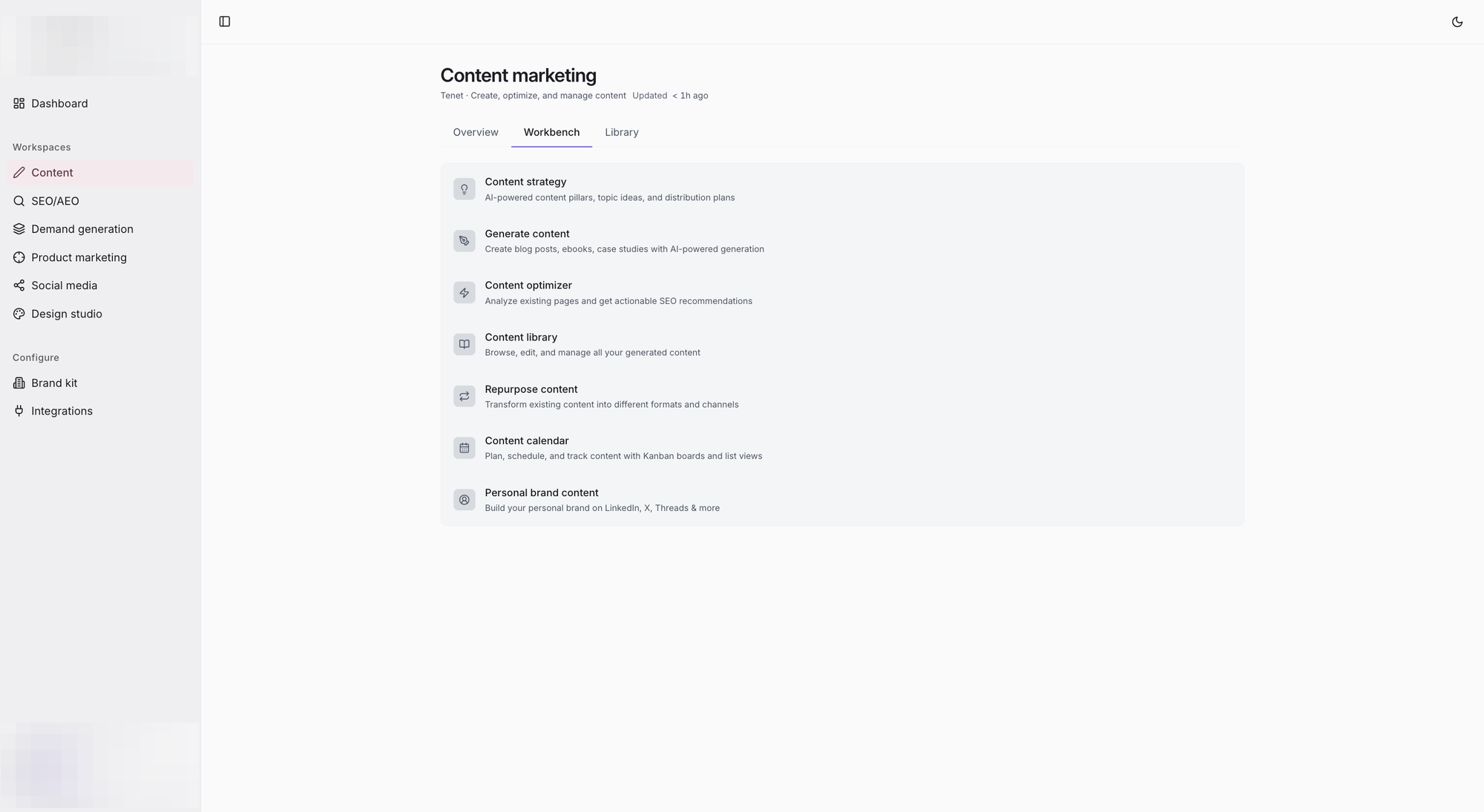
Tenet is an AI marketing agent built for lean teams — solo marketers, founders, and small businesses that need to run real marketing without a full team behind them. It covers content, SEO, product marketing, demand gen, social, and design from one platform, and it learns your brand voice in minutes so everything it produces sounds like you, not a generic AI.
The part that makes it practical for SMBs is how it connects strategy to execution. Most businesses don't struggle because they lack access to tools — they struggle because those tools don't connect to a coherent plan. Tenet runs the research, drafts the content, optimizes it, and scores it before you ever see it. You review, approve, and ship.
 Anjana Vasan
And if you'd rather not manage the platform yourself, Tenet Operator is the done-for-you tier. You get the AI agent plus one dedicated Operator who owns your marketing week to week — building the plan, executing it, and reporting back on what's actually bringing in customers, all inside your account. No agency handoffs, no freelancer juggling, no standing calls. Just marketing that runs.
If you're ready to move past the myths, Tenet is a good place to start.