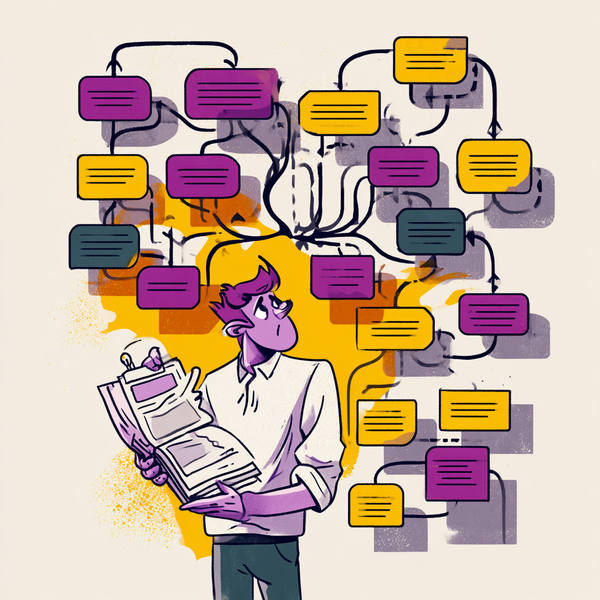


A fractional CMO typically costs $3,000 to $12,000 a month, depending on days per month rather than seniority. Most engagements land between two and six days a month, which is enough for strategy and oversight but not for execution - and that gap is the thing most people get wrong when they budget for one. What you are buying is judgement and direction; someone still has to do the work.
TL; DR
- AI is collapsing the cost of execution across all three delivery models — shifting the real competitive advantage from who does the work to who designs the system that does it.
- In-house teams are evolving from "we do the work" to "we architect what gets done" — owning strategy, data, and AI infrastructure while delegating production to machines.
- Agencies that survive won't sell deliverables; they'll sell judgment, AI system configuration, and outcome-based retainers — the ones still billing by the hour for content production are in trouble.
- Done-for-you is moving from people executing on your behalf to platforms automating end-to-end — best for high-volume, repeatable tasks, but watch for genericness and vendor lock-in.
- The right question is no longer "can we afford to outsource this?" but "do we want to own this capability long-term?" — because what you outsource today may be a core competency you wish you'd built by 2027.
There's a management principle called the "experience curve," first documented by BCG in the 1960s. The idea is simple: every time cumulative production doubles, unit costs fall by a predictable percentage. Companies that could afford to scale faster gained a structural cost advantage over smaller rivals, and that advantage widened with every passing year.
For most of the last two decades, the same dynamic played out in marketing. Larger companies could afford full marketing teams, CMOs, specialists, agencies, and the data infrastructure to tie it all together. Small businesses ran scattered campaigns with limited expertise, hoping something would stick.
AI is disrupting that equation. The cost of research, content production, audience analysis, and experimentation has dropped dramatically in the last two years. But cheaper tools don't solve the strategy problem. You can give a construction crew better equipment, but without a skilled architect, you still end up with the wrong building.
That's why the AI Fractional CMO is emerging as a distinct category. Not just a fractional CMO who knows what AI is, but a senior marketing executive who can design and operate an AI-driven growth system at part-time rates, for businesses that need C-suite thinking without C-suite overhead.
The fractional executive market reportedly doubled from 60,000 practitioners in 2022 to 120,000 in 2024, with demand surging 68% year over year. That growth reflects a real shift in how businesses think about senior talent.
This guide explains what an AI Fractional CMO is, what they do, what they cost, and how to decide whether your business is ready for one.
What is an AI fractional CMO?
A fractional CMO is a senior marketing executive who works with a company on a part-time or contract basis, providing C-suite strategy and leadership without the full-time price tag. Not a consultant who delivers a report and disappears. Not an agency that manages campaigns but avoids accountability for growth. A fractional CMO owns the marketing function, aligns it with business goals, and is accountable for revenue outcomes.
An AI Fractional CMO does all of that, plus something traditional fractional CMOs often can't: they architect and operate AI-driven marketing systems. They don't just "use" AI tools; they "architect ecosystems where machine learning, predictive analytics, and generative workflows align with core business objectives."
That's a meaningful distinction. Designing an end-to-end content system where AI handles research, outlines, first drafts, and distribution , while humans focus on positioning and editing ; is a process. The first is a skill anyone can pick up in an afternoon. The second requires genuine leadership experience.
How this role differs from alternatives
The easiest way to clarify the role is to contrast it with the options small businesses typically consider:
- A traditional fractional CMO brings senior strategy but may rely on manual processes, lack hands-on AI implementation experience, and take longer to build and optimize workflows.
- A marketing agency executes campaigns but rarely owns strategy. They answer to briefs you write, not to the revenue outcomes you care about.
- A solo consultant or freelancer can advise on tactics or run a specific channel, but doesn't provide the cross-functional leadership and accountability a growing business needs.
- An AI Fractional CMO combines senior strategy with the technical depth to select, integrate, and govern AI tools across your marketing stack. They own outcomes, not just deliverables.
Why small businesses need this now
Over the last two to three years, marketing has become simultaneously more powerful and more complicated for small businesses.
On one side: AI tools now let a team of two do the content work that used to require a team of ten. Paid media platforms optimize bids autonomously. SEO analysis that once required a specialist's full week can be completed in hours.
On the other side: more tools means more decisions, more configuration, more fragmentation, and more ways to waste money. Tech Trends 2026 notes that many small firms now use AI tools but "fail to realize impact due to misaligned tools and goals, poor data hygiene and measurement, and lack of workflows and governance." The tools are cheap. The judgment to deploy them well is not.
The gap AI can't fill on its own
Sara Nay, CEO of Duct Tape Marketing, put it plainly in a recent interview:
"You still need humans directing AI on the front end and then editing AI on the back end." AI can process faster and produce more, but it can't make the strategic tradeoffs that require understanding your market, your customers, and your business model.
Small businesses feel this gap acutely. Full-time CMOs with deep AI fluency now command $250,000 to $570,000 annually, according to analysis of marketing compensation. That's out of reach for most companies below $5 million in revenue. The AI Fractional CMO fills the space between "we have no senior marketing leader" and "we can afford an excellent executive."
The forces creating this category
The path from traditional marketing to this model follows a clear arc: companies started with agencies, then brought strategy in-house with full-time CMOs, then discovered fractional CMOs as a cost-efficient alternative. The explosion of AI tools added a new layer of complexity that fractional leaders now need to navigate.
AI is accelerating fractional CMO demand, because AI can automate execution but cannot replace strategic leadership. The fractional model pairs high-level strategy with AI-accelerated tactics — which is what growing small businesses need but rarely have.
The competency stack of an AI fractional CMO
Not everyone who calls themselves an "AI Fractional CMO" is one. The role requires a specific combination of capabilities that most marketing generalists and most technologists lack individually.
The title gets used loosely — the article defines it as four competencies together rather than any one of them alone.
most people who call themselves an "AI fractional CMO" have one or two of these. the role needs all four.
Strategic and revenue leadership
This is the foundation. An AI Fractional CMO should be able to define your positioning and differentiation, design a full-funnel growth system from awareness through retention, build messaging frameworks that convert, and align your marketing and sales teams around shared revenue metrics. If they can't do this independently of the AI angle, nothing else they bring matters.
AI literacy and tool orchestration
Beyond knowing which tools exist, an AI Fractional CMO should be able to:
- Evaluate tools against specific business outcomes, not feature lists
- Design workflows that combine multiple AI capabilities , research, drafting, analysis, optimization ; into coherent processes
- Prioritize tools by speed-to-value and ease of handoff to internal teams, not technical novelty
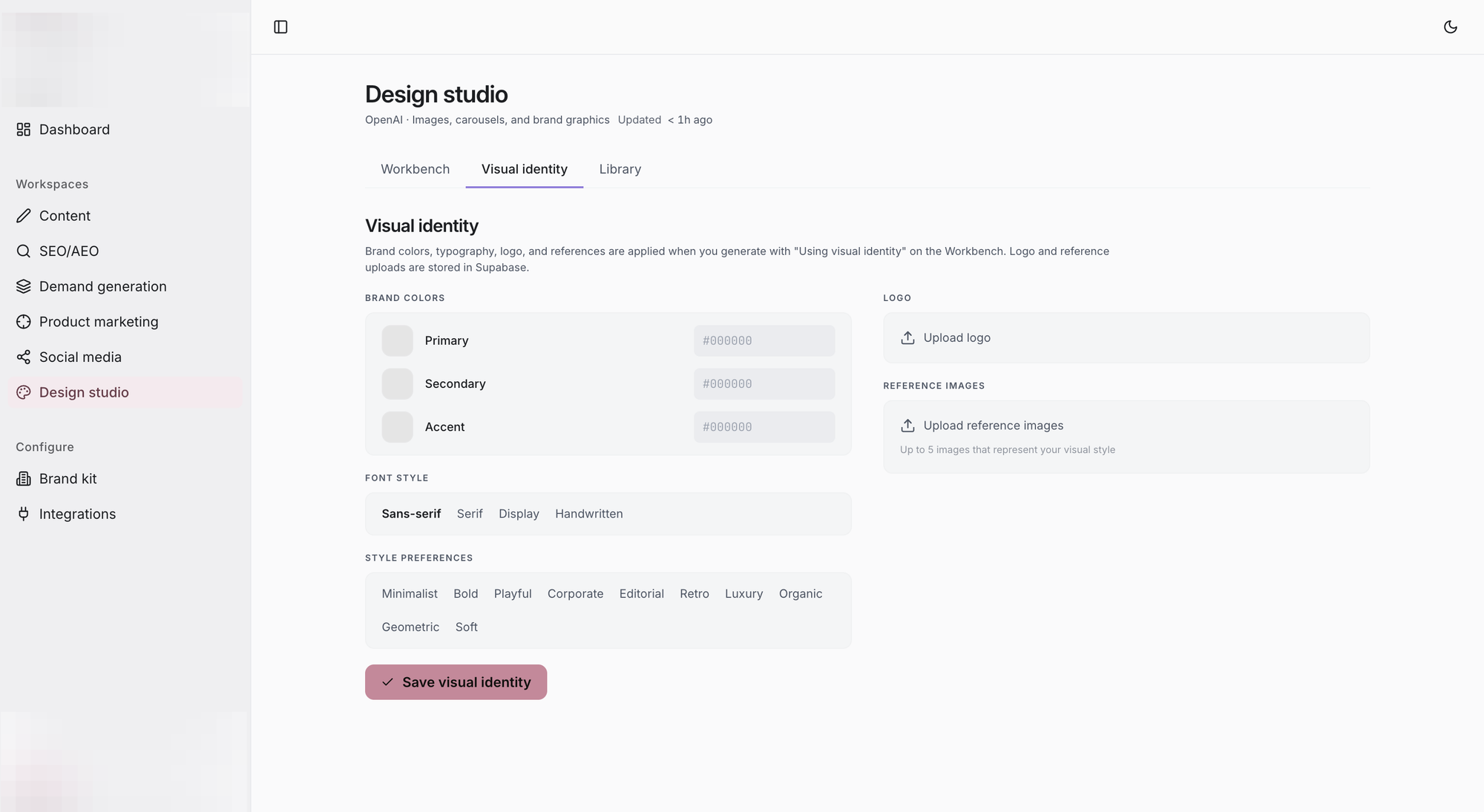
Forbes Business Council makes a useful point here: "Speed of insight matters more than depth of feature sets." A small business doesn't need the most sophisticated AI stack; they need one that produces results and that their team can operate without the CMO in the room.
Data, measurement, and experimentation
A competent AI Fractional CMO should be comfortable defining KPIs that matter, building dashboards that track funnel health and AI workflow efficiency, designing experiments to test messaging and channel hypotheses, and reading attribution data across channels. Without this capability, you're flying blind regardless of how many AI tools you're running.
Change management and team coaching
This is the most underrated competency on the list. Introducing AI workflows into a small team requires explaining what's changing and why, building new habits and processes, managing resistance, and upskilling non-technical staff so the systems outlast the engagement. A leader who can't do this will leave behind a collection of tools no one knows how to use.
What an AI fractional CMO does day-to-day
Core marketing responsibilities
The standard fractional CMO scope includes owning marketing strategy and annual planning, defining positioning and core messaging, leading demand generation programs, overseeing brand consistency, managing agencies and freelancers, and reporting on marketing's contribution to pipeline and revenue.
An AI Fractional CMO does all of this and adds a layer of AI-specific work: assessing your current tech stack and data quality, designing AI workflows for content, SEO, paid media, and analytics, building governance policies for AI use, and training your team to operate within the systems they build.
How involved they are in execution
This varies by business stage. For very small companies with no internal marketing support, an AI Fractional CMO may be hands-on across content creation, campaign setup, and analytics. For larger SMBs with a marketing coordinator or small team, they focus more on strategy, system design, and oversight while the team executes.
According to GoFractional's analysis, the typical engagement involves a clear split between leadership time (strategy, decision-making, team coaching) and execution oversight (reviewing outputs, refining campaigns, monitoring performance). Getting this balance right is part of scoping the engagement correctly from the start.
Inside a 90-day AI fractional CMO engagement
Most AI Fractional CMO engagements follow a structured progression. Here's how the first 90 days typically unfold.
A typical engagement follows a set progression — here's how the first 90 days unfold.
by week 13 the goal is a system your team can run — not a CMO you still need in the room.
Phase 1: Audit and AI-readiness assessment (weeks 1–3)
The engagement starts with diagnosis, not action. A good AI Fractional CMO will review your current marketing channels and results, map your existing tech stack and data quality, assess your team's AI literacy, and identify the biggest gaps between where you are and where you need to be.
Deliverables: a diagnostic report covering what's broken, an AI-readiness assessment, and a prioritized list of quick wins.
Phase 2: Strategy and growth system design (weeks 3–6)
Before touching any AI tools, the fractional CMO aligns your marketing with your business goals. This means clarifying your ideal customer profile, sharpening your positioning and messaging, mapping the full customer journey, and designing the growth model that will drive revenue.
AI plays a supporting role here — helping with competitive research, customer interview synthesis, and scenario modeling — but the strategic decisions are human.
Phase 3: Implementation and AI tool integration (weeks 6–10)
With strategy in place, the fractional CMO selects and configures the tools, builds workflows, trains the team, and launches the first campaigns or content programs. The emphasis is on minimal, practical stacks that produce results quickly and that internal team members can maintain without constant hand-holding.
Phase 4: Optimization, governance, and handover (weeks 10–13)
The final phase refines what's working, builds dashboards and reporting cadences, formalizes governance policies, documents SOPs and prompt libraries, and plans for sustainability after the engagement ends. The goal is to leave behind a system, not a dependency.
Tool stack: what AI fractional CMO’s use
The most credible AI Fractional CMOs aren't running fifty tools. They're running a focused, practical stack organized around specific functions. It is categorized by function rather than by brand, which is the right approach.
For small businesses with tight budgets, the most impactful starting point is usually content and SEO, where AI reduces production time dramatically and where organic traffic gains accumulate month over month.
Cost, pricing models, and ROI
What you'll pay
A full-time CMO costs $250,000 to $570,000 annually in salary alone, before benefits and equity. A fractional CMO engagement typically runs $60,000 to $180,000 per year, representing 40% to 70% savings.
Drag to your actual monthly budget to see where it lands against the article's ranges.
For AI-specialized fractional CMOs, rates tend to sit at the higher end of the fractional range, reflecting the additional technical depth. Monthly retainers typically run $5,000 to $15000 depending on scope, hours, and whether tool configuration and training are included.
Common engagement structures
Most AI Fractional CMO engagements take one of three forms:
Monthly retainer (most common): A fixed number of hours each month for ongoing leadership and execution oversight. Works well for businesses that need continuous strategic direction.
Project-based engagement: A defined scope with a clear deliverable, often a 90-day transformation engagement. Works well for businesses that need to build a foundation before transitioning to ongoing management.
Hybrid performance model: A base retainer plus some form of performance component tied to revenue or pipeline growth. Less common but increasingly discussed in the market.
Measuring ROI
Revenue metrics matter most: pipeline growth, customer acquisition cost, lifetime value, and payback period. But AI-specific efficiency metrics are worth tracking too — content throughput (assets produced per month), experimentation velocity (tests run per quarter), and time from insight to campaign launch.
Companies using fractional CMOs report 29% higher revenue growth compared to peers without senior marketing leadership, though this figure comes from vendor-adjacent research and should be treated as directional rather than definitive. The underlying logic is sound: fewer wrong-channel experiments, faster course correction, and a marketing function that builds on itself rather than resetting every year.
AI governance: the part most small businesses skip
Speed and scale are the obvious benefits of AI in marketing. Governance is the less glamorous but equally important counterpart.
Why this matters more than it seems
An AI Fractional CMO working without governance protocols can inadvertently:
- Expose sensitive business data to public large language models
- Produce off-brand content that erodes your positioning
- Generate factually incorrect claims that create legal or reputational risk
- Build processes that no one understands or can audit later
Gartner predicts by 2028, 50% of organizations will adopt zero trust data governance as unverified AI generated data grows, CMO guides the risks aren't hypothetical. Mishandled data, biased outputs, and non-compliant content are real failure modes that show up in practice.
What good governance looks like
A responsible AI Fractional CMO will establish clear policies for which tools can access which data, define approval workflows for high-risk content (anything that touches pricing, legal claims, or customer communications), build prompt libraries that encode your brand voice and constraints, document which AI systems are running and why, and ensure everything can be audited and handed off cleanly when the engagement ends.
For businesses in regulated industries , healthcare, finance, legal services ; governance isn't optional. It's the condition under which AI can be used at all.
How to choose the right AI fractional CMO
Evaluation criteria
Track record matters more than credentials. Look for documented examples of revenue impact, not just campaign execution. Look for evidence of AI system design, not just familiarity with AI tools. Look for a data-driven mindset — someone who talks in hypotheses and tests, not gut feelings and best practices.
McKinsey emphasizes the ability to translate AI capabilities into clear business outcomes. Plenty of people can demo tools. Fewer can design a system, measure its impact, and adapt it based on results.
- Walk me through an AI workflow you designed end-to-end — what was the outcome?
- How do you decide where NOT to use AI in a marketing function?
- How would you integrate with our current CRM and analytics setup?
- What KPIs would you track to show AI's incremental contribution to growth?
Interview questions that reveal real AI depth
Candidates who give specific, process-level answers have the depth you need. Candidates who describe tools they've used without explaining the outcomes they produced are tool users, not system architects.
Red flags to watch for
Be cautious of candidates who:
- Focus heavily on content volume as a success metric without connecting it to pipeline or revenue
- Can't explain their governance and data privacy approach
- Have no examples of team training or change management
- Are vague about measurement and attribution
Think Cap Advisors makes a useful point: "If your content could have been written by anyone, or by any AI model given a one-line prompt, it will not stand out." A fractional CMO who can't articulate how they maintain brand differentiation in an AI-assisted content operation is missing the most important part of the job.
Comparison: AI fractional CMO vs your other options
The table clarifies what the role fills: the intersection of senior strategic leadership and modern AI execution, at a price point accessible to small businesses.
What to do next
Before you start talking to anyone, take stock of three things: what your revenue goals are for the next 12 months, what marketing is and isn't working right now, and whether you actually have someone to own it day to day — not just advise on it, but run it. That last one is where most small businesses get stuck.
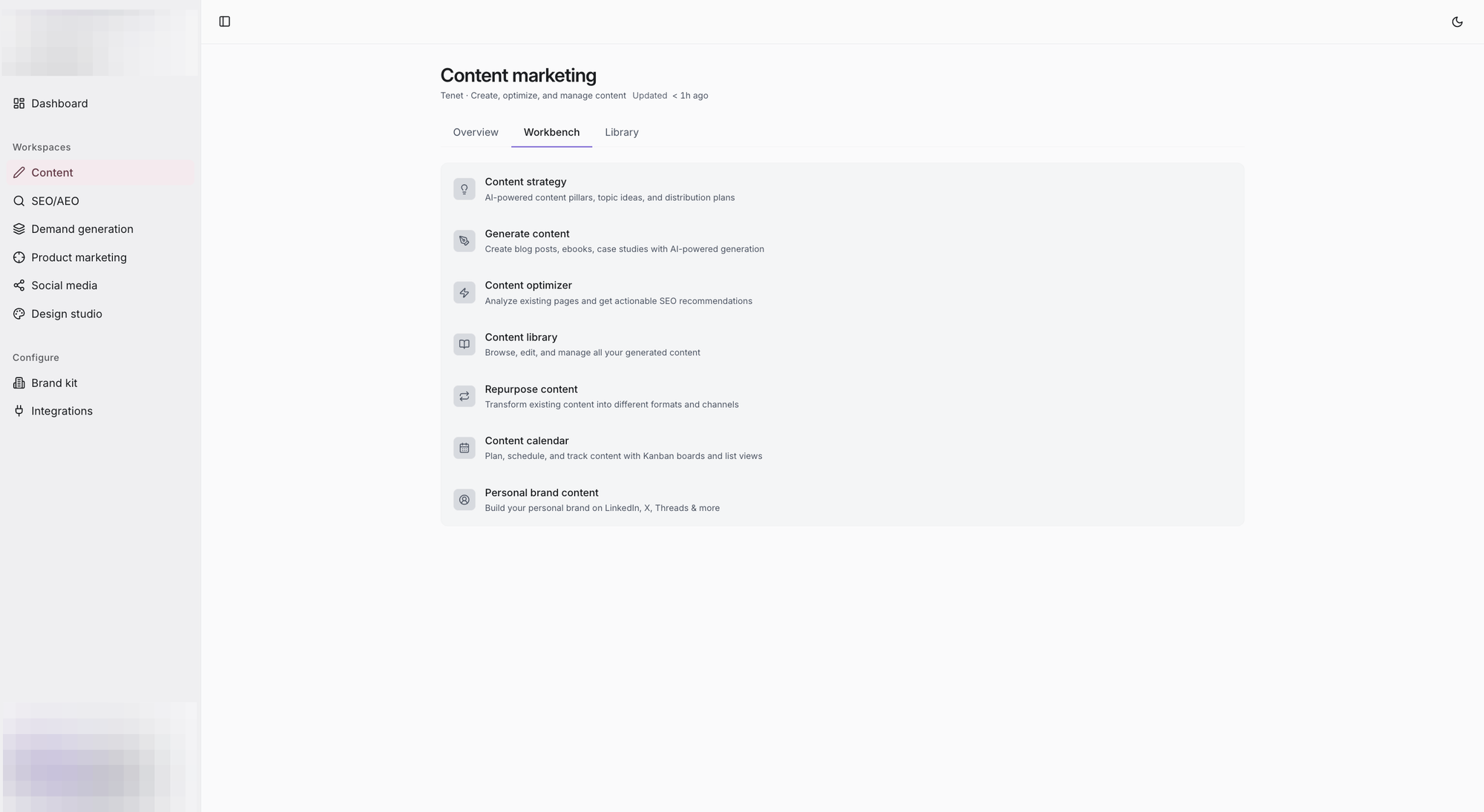
The infrastructure problem is largely solved. Small businesses today have access to the same AI-powered marketing tools that larger teams use — and Tenet was built specifically to put that within reach. But infrastructure without execution is just expensive software collecting dust.
 Anjana Vasan
That's why Tenet Operator exists: a dedicated person who works inside your Tenet account, owns your content, campaigns, and weekly output, and reports back on what's actually moving the needle. One person, backed by a powerful AI agent, doing what normally takes a whole team.
If you're ready to stop managing the marketing yourself — or stop leaving it undone — the path is simple. Brief your Operator in plain language about your business and your goals. They handle the strategy and execution. You approve the things that matter and watch the results.
That's two problems solved together: the AI infrastructure, and the experienced judgment to deploy it well.